Winemaker Nate Wall and Nomblot Tank Expert Phillip Taratko Discuss Using Concrete Winemaking Vessels at Troon Vineyard
Farming by the Moon
Troon Vineyard’s director of agriculture Garett Long and biodynamic consultant Andrew Beedy discuss farming by the Moon at Troon Vineyard.
Riding the Range

The Rhône Rangers represent not a region or single grape variety but a shared vision. With a name brought to fame on an old Wine Spectator cover, a unique wine organization was born.
The Annual Rhône Rangers Experience held in Paso Robles this February — and every February — is a testament to their — our — vision. This year’s event, the 19th, saw over eighty wineries presenting their wines to more than five hundred passionate consumers.
In my decades of doing wine events, I have never encountered a better-educated group of consumers. When you pour a roussanne or cinsault few attendees say I’ve never heard of that. It is a great gift to the winemakers pouring their wines.
As a business, why would a winery want to venture outside the big five varieties that dominate consumer purchases? There are practical answers to that question. First, anyone not growing the ideal varieties for their vineyard site is just kidding themselves. They will never make a wine that will stand out from the crowd. The second reason is as pragmatic. Why try to compete in an overcrowded market with mediocre chardonnay or cabernet sauvignon when you can do something special? If you can’t deliver something exceptionally interesting, how can you compete? Better is the ultimate sales pitch.
There is something distinct about the Rhône Rangers and their members, who are comrades in arms when it comes to the wine sales wars. Perhaps it is that so many varieties are represented or simply the mindset of those who plan to take this alternative route. I was honored to be on the seminar panel for this year’s Rhône Rangers Experience. Eight wineries offered eight wines to over two hundred attendees without repeating a style or variety. Well, there was a grenache rosé and a red grenache, but you get the point.
What is enlightening and humbling to me when I participate in these panels is how diverse the personal voyage of each speaker is as their personality expresses itself in their wines. The humbling part is that it’s always important for a winemaker to understand there is more than one valid expression of each variety.
The panel presented two wines that stood out to me among a group where every wine was a passionate example of the winemaker’s vision. That said, these two wines connected to my vision. The 2022 Last of Five Cinsault from Nenow Family Wines in Paso was lifted, lovely and floral. The 2021 Grenache Robert Rae from Clementine Carter in the Santa Rita Hills was a study in delicate balance with silky tannins and zesty fruit. I presented our 2022 Troon Vineyard Amphora Mourvèdre and was thrilled by the responses I received from the attendees. We are excited by the balance and distinctive textures that aging in amphorae brought to this young vine mourvèdre.
As always, I am busy pouring at these events and cannot get out from behind my table to taste other wines. Yet at my table at the Rhône Rangers experience I am always invigorated by the energy of the consumers who are as passionate about these varieties as those of us who grow and make wines from the classic varieties of southern France.
There are no lone rangers at this wine tasting.
2023 Vintage Recap
Troon vineyard winemaker Nate Wall and assistant winemaker Hannah Thorning review harvest 2023 in our new podcast episode!
Biodynamic Energies (or not wearing enough hats)
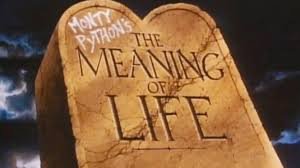
“Matter is energy. In the universe there are many energy fields which we cannot normally perceive. Some energies have a spiritual source which act upon a person’s soul. However, this “soul” does not exist ab initio as orthodox Christianity teaches; it has to be brought into existence by a process of guided self-observation. However, this is rarely achieved owing to man’s unique ability to be distracted from spiritual matters by everyday trivia,” Monty’s Python’s Meaning of Life.
Attention. Observation. These were the skills that kept you alive in the time before television, the Internet, and electric lights. The rhythm of the Solar System was the rhythm of life. Generational observation of those rhythms built a foundation to guide you as to the best time to plant and harvest and the work you had to do.
Then we lost it all.
Regaining this knowledge with all the noise surrounding us today is a struggle. Attention and observation must be connected to science and an open mind. It is connecting these dots that biodynamics struggles with today.
Having recently returned from the National Biodynamic Conference in Westminster, Colorado, these struggles were only highlighted. As Rudolf Steiner proposed in his Agricultural Course almost one hundred years ago, Biodynamics was spiritual science — an extension of the Anthroposophy, the movement he founded in the early 20th century.
Today’s split is whether biodynamics is spirituality with science or science with spirituality. There is a difference. In Anthroposophy, spirituality comes first. Today, many practitioners of biodynamics follow science, which leads to discovering spirituality. Guided by your observations and discoveries, you find the energies that make you and every part of your farm — one. There is a logic in biodynamics that modern science is discovering. Biodynamics provided a foundation based on folk wisdom, knowledge attained in an era of focused observation that is now being integrated with modern science, this era’s method of focused attention. The difference is that the old knowledge was not polluted by the commercialism that has led agricultural science down the path of chemicals and patents instead of natural systems and respect for how life has evolved on this planet.
The program at the recent National Biodynamic Conference was heavy on the spiritual and light on the science. The problem with that is that the science, the how-to of biodynamic farming, is something we can learn. Spirituality is something we attain by practicing biodynamics. One is a technique, and the other is a personal voyage. Teach us how to farm, and the inner energies of our farms will reveal themselves to us. You don’t have to follow Anthroposophy to be a biodynamic farmer — you need to connect with the energies that evolved to create the natural system we call Earth — and the science that opens these secrets to us.
At the end of the Monty Python skit quoted above, instead of the spiritual answer, they decided that the actual problem was that people don’t wear enough hats. Even in comedy skits, the debate is between heaven and Earth. In biodynamic agriculture, there should be no such debate — as heaven and Earth are one in the same.
What the Fox Knew: The National Biodynamic Conference
Welcome to a special edition of the Troon Talk Podcast recorded during the National Biodynamic Conference in Westminster, Colorado, this November. Please excuse the quality of these recordings made during the conference in public places using Bluetooth microphones. However, I am sure you will find the content more than worthwhile.
The first segment is a discussion between Dr. Lynne Carpenter-Boggs, a professor of soil science and chair of crop and soil sciences at Washington State University, and Troon Vineyard’s director of agriculture, Garett Long. Her research and teaching have included soil microbiology, alternative agricultural systems, and composting. Her work often bridges the gap between biodynamic grower observations and scientific principles.
In our second segment, we present Garett’s keynote address at the end of the conference that focused on the future of biodynamics 100 years after Rudolf Steiner gave the agriculture lectures that formed the foundations of biodynamic and organic agriculture.
The conference was exciting, bringing together an incredibly diverse range of biodynamic farmers. As the conference was interrupted by COVID, this is the first time the community has been able to gather since 2018. It is always an amazing opportunity to discuss the challenges of farming biodynamically with other farmers.
I am sure you will find this podcast episode full of interesting insights into biodynamics.
Making Biodynamic Preparations: A Community
We recently hosted a day-long Biodynamic Preparation-making workshop at Troon Vineyard in Oregon's Applegate Valley with Biodynamic farmers Marjory House and Garett Long. In this episode, they discuss the workshop, what makes the Preparations effective, and look at the future of Biodynamic farming.
There is a companion video of the Preparation-making workshop that can be viewed at this link.
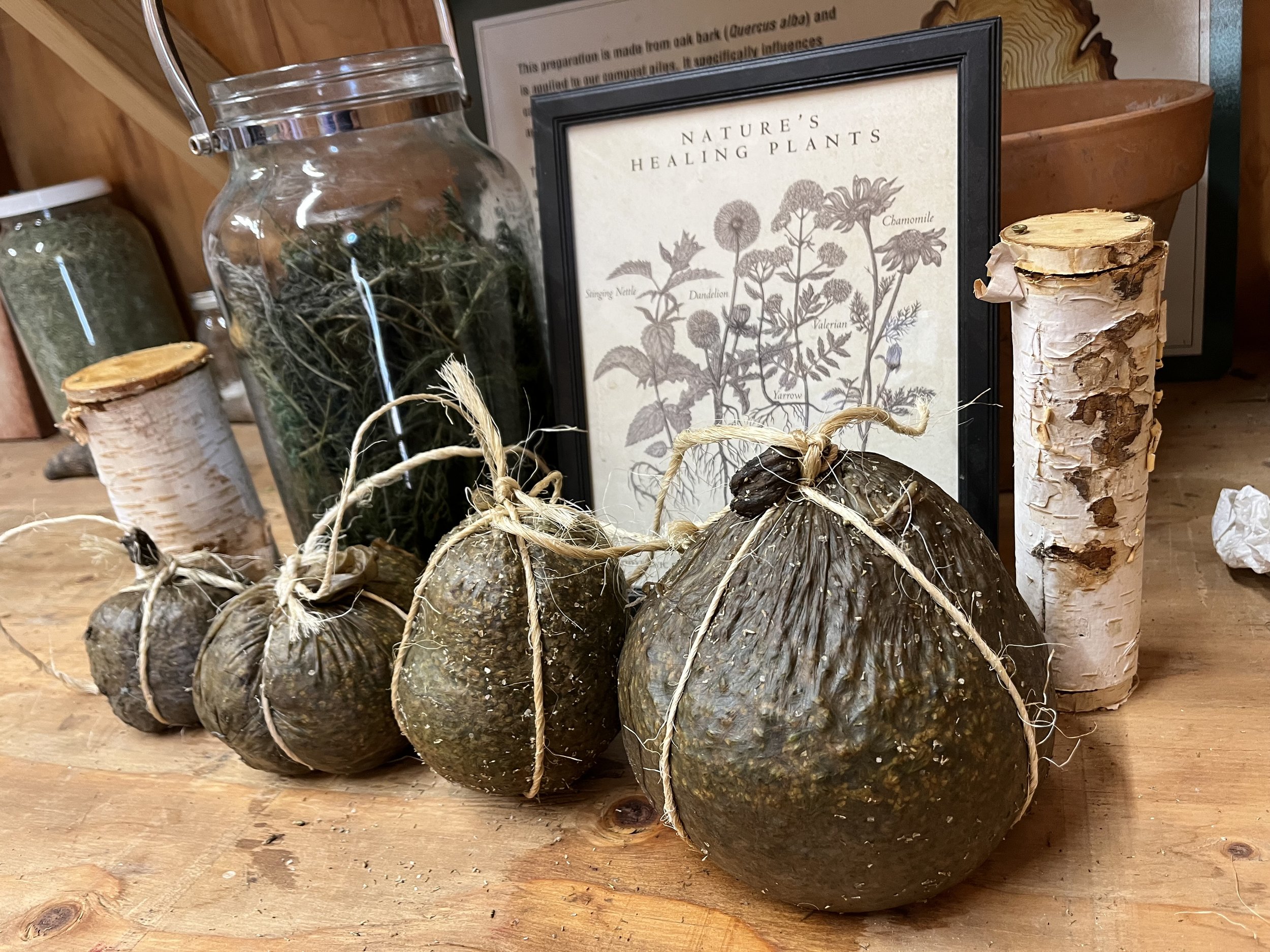
In this episode of our Troon Talk Podcast, Biodynamic Consultant Andrew Beedy and Troon’s Director of Agriculture Garett Long discuss making the compost preparations.
The Biodynamic Compost Preparations
Every fall, our next-door neighbors at Noble Organic Dairy Farm deliver 400 tons of cow manure to us at Troon Vineyard and Farm. To this treasure, we add the pomace from our harvest, kitchen scraps, garden, and landscaping residue, and biodynamic hay we grow on our farm. Then, when the piles are constructed, the last additions transform these raw materials from compost to biodynamic compost.
To this massive mass of refuse and manure, we add minuscule quantities — homeopathic quantities — of the biodynamic compost preparations: 502 Yarrow, 503 Camomile, 504 Stinging Nettle, 505 Oak Bark, 506 Dandelion, and 507 Valerian. While cow horn manure — BD 500 — is the media’s symbol of the biodynamic preparations, these six compost preparations are the building blocks of biodynamics - the soul of our soils.
The preparations are hard to understand, and we don’t pretend we do. There is much that is not understood in agriculture. Working with the preparations is a weaving together of intentions, experiences, microbiology, and natural processes.
We are striving to produce all of our biodynamic preparations on our farm. As of this year, the only one we have yet to produce is the 505 Oak Bark, which we will produce next year. In biodynamics, the process and intention are part of the results.
First, you grow the plants, the botanicals that are the base of the preparations. Then, nature transforms them. Each interaction with your farm’s microbiology captures nature’s energies. That is the point of biodynamics. The making of the preps focuses your intentions. Growing the botanicals adds biodiversity, and burying them connects them to your farm. Applying them completes that circle. That’s the part that works. Nature works in cycles — in circles. Our work is to help the circle complete itself — not invent our own geometry.
Native Americans used yarrow to treat wounds and colds. The use of chamomile and valerian to improve sleep and reduce anxiety is well known. Stinging nettle has been used for centuries to treat painful muscles, joints, arthritis, and anemia. Oak bark and dandelion teas were used to aid appetite and digestion. For millennia, these botanicals have been recognized as natural medicines. Rudolf Steiner was inspired to focus on natural herbs by meeting Felix Kogutski, an Austrian herb-gatherer who sold these plants to pharmacies and medical schools. Steiner died in 1925, shortly after outlining the preparations. Dr. Ehrenfried Pfeiffer did the real work of developing them. His book, published in 1938, took Stiener’s original ideas from his lectures in 1924, researched them and made them practical, and provided the foundation on which preparation-making exists today.
Making and using the biodynamic preparations makes you feel a part of nature’s cycles. We can’t understand all of them, but we can still work harmoniously with them. We need to honor what we don’t understand and the things that work without destroying the natural systems that have evolved on Earth.
There is another intangible when making and using the preparations — it’s fun. There is not a better team-building exercise than picking dandelions and the other flowers together. Even filling cow horns with manure becomes a group celebration.
Energies of all kinds enrich your farm.
A video look at making Biodynamic Preparation 502
Alternative Vessels for Alternative Wines
Winery tours have become increasingly boring over the last few decades. The rows of stainless steel tanks and stacks of beautiful new French Oak barrels became the norm. Of course, as the wineries became boring — so did the wines.
The wines increasingly became the product of the vessels and additives, not the vineyard where the grapes were grown. Modern technology was so ubiquitous in the cellar that shiny tanks and new barrels became the norm — the traditional way of winemaking.
Clearly, this is not based on historical winemaking. Clay vessels, concrete, large well-used wood tanks and barrels were used to make the wines that made Bordeaux, Burgundy and Barolo famous names long before the first stainless steel tank arrived.
Not to say that there were not a lot of problems. I well remember the bretty wines from revered wineries a few decades ago. Yet, even if those wines had faults, they were at least authentic. As Nicolas Joly notes, “Until the end of the 1950s not all wines were good, far from it, but almost all of them were authentic.”
We’re at the end of a five-year complete replant of our vineyard at Troon in Oregon’s Applegate Valley. It was an intense project. Our goal in all this work and investment was to make wines that reflected this vineyard, this soil, and this place — authentic Applegate Valley wines.
So what’s old is new in the cellar at Troon Vineyard. Over the last few years, new amphorae have arrived, old foudré were found and concrete tanks are arriving this year to join the neutral French Oak barrels we buy from friends in the Willamette Valley.
In this episode of Troon Talk, Troon Vineyard winemaker Nate Wall discusses alternative vessels for alternative wines in-depth.
The Whole Farm Includes the Workers
It is no secret that agricultural workers are abused and exploited. This applies to the entire world, but that it happens so blatantly in wealthy countries like the United States is particularly shameful. From the beginning, this has been one of the major attractions to me about Regenerative Organic Certification (ROC).
There are three pillars to be scaled to achieve Regenerative Organic Gold certification. At Troon Vineyard, as we were already certified CCOF Organic and Demeter Biodynamic®, we were well along on the Agricultural and Animal Welfare pillars. Still, the Social Welfare pillar was a concept we felt we were attuned to, but being certified was new territory.
It was new territory for us and unique for the Equitable Food Initiative (EFI), the certifying body for our Social Welfare pillar. As so many farm workers are mistreated by “big ag” operations, they have necessarily been focusing their work there. Small farms, like Troon, are governed not only by Federal laws and OSHA but by a state government that at least attempts to protect worker rights. So we operate under the stricter Oregon OSHA and agricultural minimum wage requirements. Basically, by law, we are required to do most of the things included in the EFI. To accommodate our unique, small-farm situation, EFI created a new certification called ERGO. Troon Vineyard was the alpha tester for this new certification and became the first small farm in the world to achieve it. Being first aligns with our goal to help create a ROC certification system that other small farms aspire to achieve.
An essential and enlightening aspect of this certification process was the creation of a committee of workers from throughout the farm, even our small one, to improve communications between teams. It is important to understand that no matter how much you think you are trying to hear every team member, there is always room for improvement and issues you are unaware of. This process alone made us think about we relate to each other.
Troon Vineyard assistant winemaker Hannah Thorning, our guest on the episode, led our team through this process. When we achieved our EFI ERGO certification, we joined three other farms worldwide to become Regenerative Organic Gold Certified®. I know you will enjoy our discussion of the process and achievement.

I'm Interviewed on the Regen Brands Podcast!
A great conversation on Troon Vineyard and regenerative agriculture on the ReGen Brands podcast! I had a great talking about biodynamics and Regenerative Organic Gold Certified® farming!
https://regen-brands.com/episode/38-craig-camp-troon-vineyard
Preparation is the Key
There are few better team-building activities than stuffing cow horns with fresh manure together — at least on a Biodynamic farm. Sometimes you wonder if it’s the process or preparation that is making such a difference on your farm. I believe it is the combination of both that enlivens biodynamics.
Intentionality is a vision that flows through the practice of biodynamics. This is the guiding concept in making the biodynamic preparations. We grow and harvest the plants that are raw materials for most of these preparations. We carefully plan our schedule for making and harvesting these preparations to follow the rhythm of the seasons and the Moon. Every aspect of their production and use is filled with intentionality. There are good reasons biodynamics is called a practice. It is as much a way of thinking as a farming strategy.
There are two groups of Biodynamic preparations — the field sprays, 500, 501, 508, and the compost preparations, 502 to 507. In this episode of Troon Talk, we are focused on the three field preparations and will follow up with a second episode on the compost preparations.
Biodynamic Preparation 500, or cow horn manure, is by far the most well-known of the preparations, as the cow horns are every journalist’s favorite photo opportunity. Their cameras have made BP 500 the very symbol of biodynamic farming. It is true, if you only use one of the preparations — 500 is the one. But 500 is only half of the dynamic duo that includes BP 501 — the quartz or silica spray.
500 works in the dark world of roots and 501 in the sunlight transforming energy into nutrition in the leaves. 500 is applied to the soil, inoculating the soil with a complex blend of microbiology and feeding the life already in your soil. These preparations demonstrate where modern agricultural science and biodynamics continue to come closer together. 500 is a fermented tea that feeds the soil’s biological system. The silica crystals from 501 improve photosynthesis, increase plant cell wall strength, and add growth. These preparations are now mimicked by agricultural chemical companies that market them as patented brand-name products. The attack on Biodynamic Preparations is often from these corporations because they cannot patent the preps.
As famous as the preparations made with cow horns are, BD 508 spray preparation is the least known. No burying for months underground, 508 is a simple herbal tea made from Horsetail (Equisetum Arvense). This plant is rich in silica, which as with 501, supports cell wall strength and is also an anti-fungal we use to supplement our powdery mildew spray program.
Our biodynamic preparations are based on microbiology and chemistry. There is no mystery here except the mystery of nature itself.
Holistic Wine Sales
We always discuss farming and winemaking, but little is said about sales. Sales should not be ignored because to be green, you have to make a profit. With no margin, there is no mission.
As crucial as our farming is, convincing other farmers that there is a method to all this madness is essential. A holistic farm has to combine regenerative agriculture with holistic sales. All of our work on our farm is irrelevant if we can’t turn a profit. That means a focused sales strategy reflecting the intensity and intentionality we put into our farming and winemaking.
Holistic sales start with authentic wine with a transparent provenance. The most effective way to communicate your standards is by certification. At Troon Vineyard and Farm, our Demeter Biodynamic®, Regenerative Organic Gold Certified®, and CCOF Organic certifications confirm the integrity of our work.
Confusing consumers are the sustainable greenwashers who dilute the regenerative agriculture message and mission. Some regions claim sustainability but allow Round-up and an arsenal of other chemical cures — the damage they do more than offsets those with good intentions.
The distribution market is a hodgepodge of state laws and regulations designed to ensure tax collection and protect large wholesale companies — not protect consumers. Fortunately, the continued consolidation of wholesalers into multi-state behemoths has created an opportunity for small distributors specializing in biodynamic and organic wines. Every state has a growing list of independent wine shops, wine bars, and restaurants with that same vision. Their businesses are supported by an increasing customer base that cares equally about quality and products produced with the Earth in mind.
This is the holistic wine sales market. Dedicated winegrowers, distributors, retailers, and consumers work in unison to make it possible for biodynamic and organic farms to survive and prosper — while farming like the world depends on it.
In this episode of Troon Talk, we discuss with Director of Sales Nate Winters the market for naturally crafted wines and the work of bringing them to consumers seeking these wines throughout North America.
Talking Soil with Farmer Garett Long
"We should be farming the soil, the mycorrhizal fungi, more than the vines. What they need is in the soil if we create the conditions that make that nutrition available to them. At first, I was focused on what the vines were lacking when I should have been focused on what the soil was lacking." said Michele Cotarella, an Italian winemaker and viticulturist to wine writer Jamie Goode.
Carbon farming is farming the soil. We have just under fifty acres of grapevines on our one-hundred-acre farm in Oregon's Applegate Valley. The grapevines themselves occupy a small fraction of those acres. The rest of the vineyard is planted in a diverse — almost thirty — range of cover crop plants. These cover crops have one purpose — to feed the living organisms that transform dirt into soil.
Our farming at Troon Vineyard is fundamental. If you have healthy soil, you are more likely to have healthy plants. Healthy plants can defend themselves. Sick plants can’t defend themselves and invite nature’s clean-up crew. We call them pests, but they are essential to nature’s plan. Soil health means vine health, better wines, and more nutritious produce.
We aspire to cooperate with natural systems. There is a system that creates healthy soil that nourishes healthy vines that produce healthier grapes. The more we interfere with that system, the faster it breaks down. Unfortunately, interference has become the norm. The results were predictable.
So at Troon Vineyard, we are farming the soil. The bounty that our farm gives us is a gift from those soils. In this Troon Talk on Wine Camp episode, we discuss carbon farming, no-till viticulture, and farming our soils with farmer Garett Long.
Going Native: Indigenous Fermentations
Winemaking in the world is mostly risk-averse. This is understandable as most wine is produced as beverage alcohol, not as a product of nature. To produce a standard beverage alcohol product, your recipe must be reproducible. The goal is to make a product that is identical year after year. This approach is more in line with an assembly line than farming.
Each growing season has its unique characteristics, so by definition, naturally grown produce will have its distinctive traits each harvest. This is where the two concepts of winemaking diverge. One chooses an assembly line mentality, while the other chooses nature.
To choose nature is not only giving up control of the process. It is admitting that nature is in control. When you try to control nature, more and more inputs are required. It takes a lot of intervention to enforce standardization. It requires the courage of your convictions to take Mother Nature’s ride. The results of these choices are predictable. One gives you solid commercial-grade beverage alcohol — the other gives you wine.
At Troon Vineyard, everything we do is focused on supporting natural systems and getting out of their way. Our soils and plants are well suited to do their jobs. So are the native yeasts that populate our farm. These indigenous yeast populations are unique to our environment and are an essential component of what makes Troon, Troon.
There is much we do not know. When we’ve had genetic sequencing done on our ferments, many of the yeasts identified do not even have a name. That is very exciting. They are part of who we are as a winery and farm.
In this episode of Troon Talk on Wine Camp, winemaker Nate Wall eloquently explains how native yeast fermentations are an essential part of the signature that gives our wines a sense of place. That place is Troon Vineyard on the Kubli Bench in Southern Oregon's Applegate Valley.
Talking Biodynamics and Regenerative Organic Wine and Farming
Introducing the Troon Talk Podcast Series on Wine Camp
https://wine-camp-by-craig-camp.captivate.fm/episodes
I am pleased to introduce our Troon Talk podcast series focusing on the team’s work at Troon to create a genuinely regenerative farm. As general manager of Troon Vineyard in Oregon’s Applegate Valley and the author of this website, I am excited to be able to present the thoughts and knowledge of a creative group of innovative farming and winemaking professionals via these podcasts.
We have a story to tell at Troon Vineyard. We are going to tell it here. The explosion of podcasts is overwhelming, but we have a unique and important story to share, as our mission exceeds the boundaries of our small farm. That vision goes beyond naturally crafting exceptional wines, as our mission is to change the world — or at least to be a small part of that change. The slogan of the Regenerative Organic Alliance is “farm like the world depends on it.” It does, and we do at Troon Vineyard.
As committed as we are to biodynamic regenerative organic farming and winemaking, what we do on our 100-acre farm will not change the world unless we convince other farmers and winemakers to adopt that same mission. Also, we must convince wine consumers that wine crafted with quality, place, and planet in mind is worth the search. Those are the missions of this podcast.
I have been sharing my thoughts about wine online for two decades at Wine Camp. Since 2016 my writing has been focused on our journey at Troon Vineyard as we transformed this special vineyard into the biodiverse, regenerative farm it has become today. Now, in addition to my writing, we will add this podcast, along with our Vimeo and YouTube video libraries, to better share our progress toward true regenerative agriculture. We aim not only to convince but to convert.
At Troon Vineyard, we are certified Organic, Demeter Biodynamic®, and Regenerative Organic Certified®. What does all of that mean? In the simplest terms, Organics tell you what you can’t do. Biodynamics works with a framework of natural rhythms and proactive probiotics, the Biodynamic Preparations, to feed the life in your soils. Regenerative Organic certification starts with organic certification and then goes far beyond to include no-till agriculture, human and animal welfare, and the requirement to show that you are just not hurting the environment but actually making it better. Most of all, biodynamics and regenerative organic are not simply sustainable, a term the greenwashers hijack. It is not enough to sustain the status quo. We have to actually improve our farms and soils, which, of course, will also improve our wines.
The goal of this podcast is not to present wine or regenerative agriculture 101 courses. We will delve into some of the more technical aspects of our farming and winemaking. In the show notes for each episode, there will be links and email addresses where you can reach out with even more detailed questions. Sharing what we have learned is the foundation of regenerative agriculture.
You can subscribe with your favorite podcast app here.
We will be posting new episodes every two to three weeks. Upcoming podcasts will include:
Winemaker Nate Wall on native yeasts fermentations (which was released today)
Farmer Garett Long on no-till agriculture and carbon sequestration
Director of Sales Nate Winters on the markets for natural wines
Assistant Winemaker Hannah Thorning on the Equitable Farm Initiative and the Regenerative Organic Gold Certification
Farmer Garett Long and Biodynamic Consultant Andrew Beedy on the Biodynamic Preparations
Winemaker Nate Wall on making Amber or “orange wines”
Viticulturist Jason Cole on dealing with red blotch virus in the vineyard
Farmer Garett Long on integrating livestock in the vineyard and on the whole farm
Winemaker Nate Wall on making Pét Nat sparkling wines
We look forward to sharing our successes, failures and lessons learned with you on the Troon Talk Podcast.
You can subscribe on Apple Podcasts, Spotfiy, Google Podcasts and Amazon Music or stream via RSS at this link.
Craig Camp on discovering wine, moving to Southern Oregon, and his love for risotto
Thanks to Trish Glose for interviewing me! I had a great time and it was fun to share a bit of my wine history.
Red Blotch Virus at Troon Vineyard
Natural Disasters
Hail, fire, and frost are dramatic natural disasters faced by farmers. Winemakers worldwide have suffered cataclysmic devastation from these forces of nature — more than in the past during these last years. However, some natural disasters are not dramatic. Many agricultural disasters are sensational events where the damage is done in minutes. As catastrophic as these events are, agriculture has slow-motion catastrophes with results as dire.
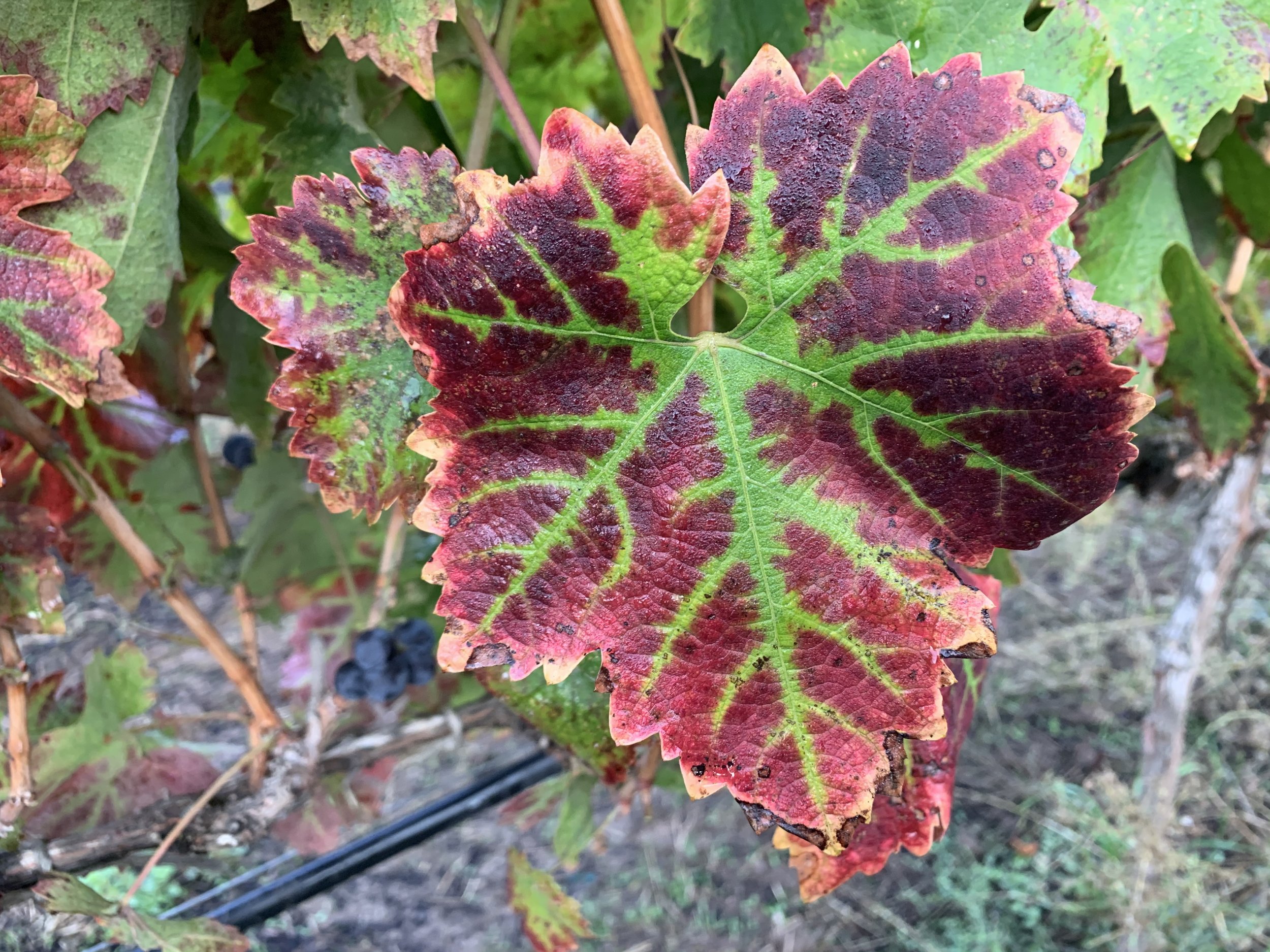
While we at Troon have been fortunate enough to avoid the more dramatic disasters, we have not been lucky with the slow-motion ones. In our case, the disaster has been from a microscopic enemy — the red blotch virus. We are all familiar with viruses after the last several years, but plants, too, can be devastated by viruses. This disease shows itself as you approach harvest; suddenly, the green disappears from the leaves to be replaced by brilliant red color in many red varieties. This shuts down photosynthesis in the vines and prevents the grapes from fully ripening. The color change may look like beautiful fall colors, but it is a symptom of the vines slowly dying.
In 2018, testing confirmed the worst; one hundred percent of the vines at Troon Vineyard were infected with the red blotch virus, so we were forced to embark on a five-year project to replant our entire vineyard. We are now in year five. Our replanting project called for ten acres a year — pull out ten and replant ten. Our goal was to maintain our production as best we could during this process, but there was going to be a vintage during this transition where we would fall short of our production goals. We are now at that point.
After this year’s harvest, we pulled out the last of the old, virus-infected vines. It is always bittersweet to remove even diseased vines — but this last group was especially hard. These were the last of the vines that were here when I arrived in 2016 and, due to a concentrated effort by our entire team, we brought them back to the best health they had been in for years. For the last two vintages they had done their best to give us the finest fruit they’d produced during our time with them. We will always remember their heroic struggle through these last years and the wines they gave us — and you.
The positive part of our total replant project is that we could select the ideal varieties for the Applegate Valley and plant them in the right spots on our vineyard. We are confident that the wines from these varieties will begin an exciting new era for Troon Vineyard and the Applegate Valley. Of course, this new era is defined not only by these new vines and varieties but by our regenerative biodynamic farming, which embraces the whole farm concepts of biodynamics and the biodiversity that encompasses.
During this replant we have transformed from Troon Vineyard to Troon Vineyard and Farm. From a vineyard, we have grown to include cider apples, a vegetable garden, re-wilded honeybees, sheep, chickens, wildlife, dogs, humans, and, of course, grapevines. While this portends a cornucopia of produce and wine in the future — for now, it means that we are only working towards that vision. Production and promise have not yet aligned.
Due to our replant, 2022 brought us to a low point in our wine production — 2023 will not be much better. But now our spirits are rising with the promise of the future. Each year moving forward will bring these newly planted vines into production and, as our first plantings begin to mature, production will increase each vintage. Best of all, we are now on an exciting voyage of discovery as we learn what wines these new vines want to give us. In the garden, the work over the last years will result in our first real harvest for our farm stand this summer. This year, the cider apple trees, whiles still years from full production, could give us enough apples for a small batch of Troon Apple Cider, not for sale, but just for fun and learning at this point.
The pain of taking away has now been totally replaced by the work of building and moving forward. Our sadness in pulling old vines is now replaced by our excitement for what new vines may create. There is a spiritual energy to all of this, not a religious one, but a connection to life, the Earth, and the cycles that tie all of these things together. While the old vines are gone, the imprint they left on our soils will give them a voice in our new wines.
There is a new freedom for all of us at Troon Vineyard in letting go of the past and embracing the future of the farm. That freedom and energy will be expressed in the new wines we make and the produce we grow.
It is the beginning of a new era for our farm — and for those of us that work it.

Harvesting Vermentino at Troon Vineyard during the 2022 harvest.
Biodynamic, Organic, Natural Wines “Explained”
Biodynamic, Organic, and Natural: Three words you find in many headlines these days that are coupled with the word “explained.” If you don’t farm, these concepts are hard to explain. With natural wines, the grapes, not the winemaker should be doing the talking. This, all too often, is not the case.
Much talk about natural wines is justifiably focused on faults, not their virtues. Mousy wines, along with a myriad of other faults, are the bane of the natural wine world. They are giving those of us committed to natural farming and winemaking wine a bad name.
Natural wines are an expression of the winemaker. Biodynamic wines are expressions of the land. Some wines are both natural and biodynamic, and some are not. You can make biodynamic wines that would not be considered natural winemaking — but why would you? Some wines claim to be naturally made with uncertified fruit, and it’s hard to make a case that they can genuinely be considered natural. Not using sulfur in the winemaking process is not a get-out-of-jail-free card if a vineyard is blasted with it — and other non-organic products.
In France, the Syndicat de Defense des Vins Naturels has established the Vin Méthode Nature certification with two tiers — those with no added sulfites and those that add less than 30 mg. per liter of sulfites. This is well outlined in an article by Jamie Goode. While no certification offers consumers protection from buying faulted wines, they do at least provide wine buyers with certified certainty of how the wines were made and what they were made with.
Many natural wines may be made naturally but not from naturally grown grapes. The economics of winegrowing means many of the most creative winemakers cannot buy their own vineyards, so they have to buy grapes. They say they control the farming, but the only way to control farming is to be the farmer. Many self-styled natural winemakers are running a shell game as they can’t totally control how their grapes are farmed. They make a big deal about how they make their wines, but how those grapes are farmed is unnaturally obscure.
There is a general assumption that natural wines are made with biodynamic or, at least, organic grapes. This is not always the case. Many claim to be made from “organically farmed” or “biodynamically farmed” fruit, but can provide no proof of either farming methods or certifications. The same can be said for many importers. Claims without certification are an affront to farmers worldwide who do the work required to be certified.
Natural wine is a winemaking mindset; biodynamics is a farming mindset. Natural wine occurs in a winery, and biodynamics happens in a vineyard. Natural winemaking is defined by the choices you make with the fruit you have to work with. Biodynamic farming gives a winemaker grapes that are ideal for natural winemaking. Which came first, the chicken or the egg? In winemaking, there is no riddle — the grapes come first.
Biodynamics is doing the work in the vineyard, and natural winemaking is doing the right thing to the fruits of your labor. Natural wine has no definition and has now been green-washed away, joining terms like clean wine and sustainable in the meaningless word salad of press releases from wine companies looking to do more good for themselves than the planet.
It is possible to make enjoyable natural wines that do not bring the tune “Three Blind Mice” to mind. The essential requirement to craft pristine natural wine is pristine fruit. In our case at Troon Vineyard, fruit like that is a gift from our Applegate Valley terroir combined with our biodynamic farming. The second requirement is an equally pristine cellar. You cannot clean too much or too often. Natural winemaking is not lackadaisical winemaking — quite the opposite. It requires planning, preparation, precision, and perfect fruit to keep the mice at bay.
A funny name with a frivolous label is no excuse for faulted wine delivering no pleasure. Labels that promise fun, should be fun to drink. Wines that remind of rodents are not fun to drink.
Mice may be cute on a label, but in the bottle, they’re vermin.

Black Pepper Grinder
Troon Vineyard Block 14 Syrah
High 102.6ºF
Low 43.9ºF
Diurnal Shift 58.7ºF
In the afternoon, you swelter in the dry heat. At dinnertime, you need a jacket. The temperatures above were recorded by our weather station in block 14 this summer. This range between the day’s high and the night’s low is called the diurnal shift. As you can see, we’ve got quite a shift at Troon Vineyard.
Our syrah grapes harvested from block 14 came in with nice numbers: TA 6, pH 3.5, malic 3.89. Another block of our syrah came in at TA 8, pH 3.27, malic 4.29. According to ETS Laboratories, recent averages for California syrah were TA 4 to 5, pH 3.7 to 3.8, malic 2 to 2.5. The difference is the Applegate Valley at work. Bright acidity is a defining characteristic of the wines grown here.
Having great chemistry in the fruit we harvest is essential as we don’t alter what nature gives us. As a biodynamic winery, we can’t — and don’t want to — “correct” our wines with tartaric acid and other additives. Corrections obliterate a sense of place.
It is important to understand that our syrah was fully ripe when we picked as the long, warm fall this year more than afforded us the luxury to let the fruit decide when it would be harvested. This fruit was harvested between 21 and 23 brix, which translates to approximately 12 to 13 per cent alcohol. We did not have to pick early to achieve this balance, which we believe is ideal.
Those high malic acids are a gift from our diurnal shift and the cool short days of our harvest season. Everything on the Kubli Bench in Oregon’s Applegate Valley cooperates to produce wines with brilliant acidity and moderate alcohol levels, which is why we make wine here.
Warm temperatures and the long summer days this far north enables ripening despite our growing season, which is compacted due to altitude and latitude, which then combines with the nearby Pacific Ocean to give us cold nights even on the hottest day of summer. This yin and yang of temperature ripens the grapes during the day and refreshes them at night. The Sun warms the vines and makes sugar, and the Moon presides over the cold air preserving acidity.
It is not a coincidence we are making wines here. When you aspire to make wine in a particular style, you don’t try to adapt to a climate, you seek out a climate that will naturally give you the wine you want to craft. Many producers are trying to fit square pegs in round holes. Just because you have foggy mornings followed by searing afternoons does not mean you are growing in a cool climate. It means you have a short window of photosynthesis each day, giving you fruit that does not ripen evenly or completely.
We aspire to make syrah that expresses the earthy, black pepper characteristics that are found in the best expressions from the Northern Rhȏne Valley. To get those spicy black pepper aromas and flavors, you need not only a diurnal shift but a long cool fall. The Applegate Valley is a black pepper grinder when it comes to grinding out expressive syrah.
Bacon fat, earthy smoky flavors join with black pepper aromatics and flavors to produce a Troon Vineyard Syrah with a very different personality than the riper, jammier and higher alcohol versions produced in California and Washington. Another variable happens in the cellar where many of these ultra-ripe versions of syrah get an extra note of sweetness from new oak barrels. As our goal is to express all of the savory notes that the Applegate Valley gives to syrah, we only use neutral barrels to age our wines.
I have no issues with someone who wants to produce a 15% syrah aged in new oak barrels, I just don’t want to drink it or make it. My concern is these extreme examples do not express the character of syrah that made its reputation. As the fat style is predominant in most New World wineries, consumers are confused when presented a syrah with crisp acidity and expressive savory characteristics instead of juicy red/black fruit oak vanilla simplicity.
We farm biodynamically because of our vision for the wines we want to make. We grow grapes for these wines in the Applegate Valley for the same reason. We were looking for a pepper grinder — we found one.